
How to prepare for residential junk removal
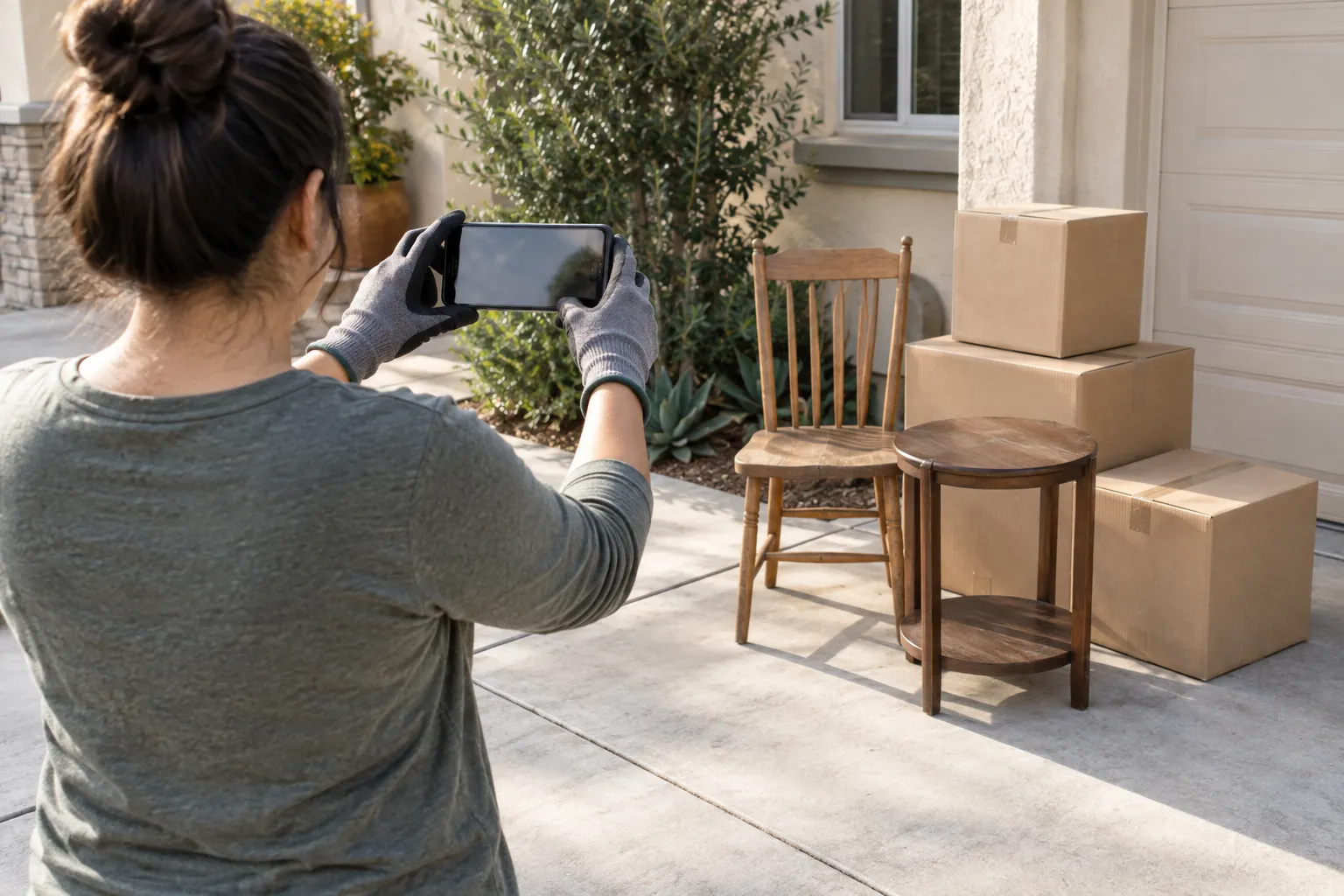
Decide what goes, separate special waste, photograph the full load, and explain the path to the truck. You do not need to drag heavy furniture outside to make the visit useful.
Good preparation is mostly decision-making. The crew can handle the agreed lifting, but only you can identify important documents, keepsakes, medications, keys, financial records, and items that belong to someone else.
1. Build a plain item list
Write the load in ordinary terms: one sofa, two broken dining chairs, ten medium boxes, a disconnected washer, loose shelving, and bagged non-hazardous household material. Include items that are easy to miss in a photo, such as a second layer behind a pile or contents inside a cabinet.
Mark any item that is unusually heavy, sharp, water-damaged, infested, attached to the building, or connected to a utility. Those details can affect the crew, tools, and disposal route.
2. Create a “stays here” zone
Move passports, tax records, photographs, jewelry, medication, keys, devices, chargers, and sentimental objects away from the removal area. If an entire room is being cleared, use a closed room, locked cabinet, or off-site location for anything that must stay.
A sticky note on every object is less reliable than one physically separate keep zone. Labels fall off, and small tags can disappear under boxes.
3. Separate materials that need another route
Do not mix paint, solvents, pesticides, motor oil, batteries, compressed-gas cylinders, fluorescent lamps, or electronic devices into an ordinary household pile. CalRecycle explains that many of these materials are banned from trash and need special handling. Redlands has a local household hazardous-waste facility for accepted residential products.
4. Record the access path
Walk from the items to the likely truck location. Note stairs, narrow turns, fragile railings, elevators, low branches, gravel, long carries, locked gates, parking restrictions, and community access rules. Share these points before the visit.
Clear small tripping hazards and open the necessary gates or rooms. Do not dismantle structures, disconnect utilities, or lift an unsafe object just to create a cleaner photo.
5. Take useful photos
- Stand far enough back to show the whole pile.
- Add a second angle when items overlap.
- Include the staircase, doorway, or gate when access is tight.
- Photograph the label or model only when the item type matters.
- Avoid sending documents, faces, house numbers, or other personal details that are not needed.
Appointment-day checklist
| Before arrival | Ready when |
|---|---|
| Items are decided | The remove pile is unmistakable |
| Personal property is protected | Important items are outside the work zone |
| Special waste is separated | Paint, chemicals, batteries, and electronics are set aside |
| Access is explained | Stairs, gates, parking, and long carries are disclosed |
| Decision-maker is available | Someone can review and approve the quote |
Questions to ask before work starts
- Which exact items are included in the quote?
- Does the quote account for the stairs or long carry?
- Are any items excluded or priced separately?
- What happens if the actual load differs from the description?
- Is basic cleanup of the immediate work area included?
When your list and access notes are ready, call 909-365-5950 or email contact@junkdawgs.net. Keep the final approval tied to the actual on-site scope.
Sources
- CalRecycle, Waste Banned from the Trash. California statewide guidance; retrieved September 18, 2026.
- San Bernardino County Fire Protection District, Household Hazardous Waste Collection Facilities. Redlands facility details; retrieved September 18, 2026.